The phenylpropanoids are a diverse family of organic compounds that are synthesized by plants from the amino acid phenylalanine. Their name is derived from the six-carbon, aromatic phenyl group and the three-carbon propene tail of cinnamic acid, which is synthesized from phenylalanine in the first step of phenylpropanoid biosynthesis. Phenylpropanoids are found throughout the plant kingdom, where they serve as essential components of a number of structural polymers, provide protection from ultraviolet light, defend against herbivores and pathogens, and mediate plant-pollinator interactions as floral pigments and scent compounds. Concentrations of phenylpropanoids within plants are also altered by changes in resource availability.[1] Phenylpropanoids and other phenolics are part of the chemical composition of sporopollenin. This substance found in pollen is not exactly known, due to its unusual chemical stability and resistance to degradation by enzymes and strong chemical reagents. Analyses have revealed a mixture of biopolymers, containing mainly long chain fatty acids, phenylpropanoids, phenolics and traces of carotenoids. Tracer experiments have shown that phenylalanine is a major precursor, but other carbon sources also contribute. It is likely that sporopollenin derives from several precursors that are chemically cross-linked to form a rigid structure.

Phenylalanine is first converted to cinnamic acid by the action of the enzyme phenylalanine ammonia-lyase (PAL). A series of enzymatic hydroxylations and methylations leads to coumaric acid, caffeic acid, ferulic acid, 5-hydroxyferulic acid, and sinapic acid. Conversion of these acids to their corresponding esters produces some of the volatile components of herb and flower fragrances, which serve many functions such as attracting pollinators. Ethyl cinnamate is a common example.

Reduction of the carboxylic acid functional groups in the cinnamic acids provides the corresponding aldehydes, such as cinnamaldehyde. Further reduction provides monolignols including coumaryl alcohol, coniferyl alcohol, and sinapyl alcohol, which vary only in their degree of methoxylation. The monolignols are monomers that are polymerized to generate various forms of lignin and suberin, which are used as a structural component of plant cell walls.

The phenylpropenes, including eugenol, chavicol, safrole and estragole, are also derived from the monolignols. These compounds are the primary constituents of various essential oils.

Hydroxylation of cinnamic acid in the 4-position leads to p-coumaric acid, which can be further modified into hydroxylated derivatives such as umbelliferone. Another use of p-coumaric acid via its thioester with coenzyme A, i.e. 4-coumaroyl-CoA, is the production of chalcones. This is achieved with the addition of 3 malonyl-CoA molecules and their cyclization into a second phenyl group. Chalcones are the precursors of all flavonoids, a diverse class of phytochemicals.

Stilbenoids, such as resveratrol, are hydroxylated derivatives of stilbene. They are formed through an alternative cyclization of cinnamoyl-CoA or 4-coumaroyl-CoA.
In the orchid Phalaenopsis, phenylpropanoid enzymes (shikimate dehydrogenase, phenylalanine ammonia-lyase (PAL) and cinnamyl alcohol dehydrogenase (CAD)) are enhanced in the process of plant acclimatisation at different levels of photosynthetic photon flux.[2]
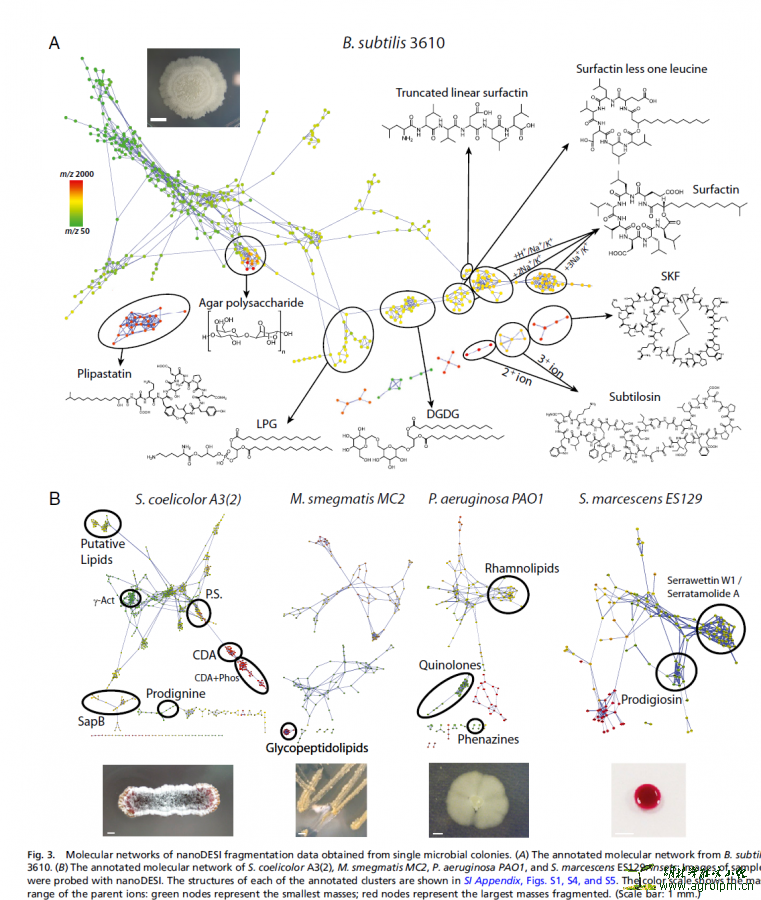
以下内容转载自小木虫 哥特复兴VS [1]Han-Dong Sun,Yi-Ming Shi:LCUV-Guided Isolation and Structure Determination of Lancolide E: A Nortriterpenoid with a Tetracyclo [...
1 目的 规范TENSOR 27红外光谱仪的操作程序,正确使用仪器,保证设备安全和检测的顺利进行。 2 使用环境 电源电压:85~265V,47~65Hz 温度范...
人是能够思想的苇草 帕斯卡尔 人只不过是一根苇草,是自然界最脆弱的东西;但他是一根能思想的苇草。用不着整个宇宙都拿起武器来才能...
同一种微生物在不同的国家或地区常有不同的名称,这就是俗名。俗名在局部地区可以使用,但不便于交流,容易引起混乱。为在世界范围...