
*实验室*

Lab & Experiment
您的位置:主页 > *实验室* > 热点与前沿 >

The dual nature of plant growth-promoting bacteria: Benefits

发布日期:2025-11-23 21:51 来源:网络 作者:网络 浏览次数:

https://doi.org/10.1016/j.crmicr.2025.100421

Abstract

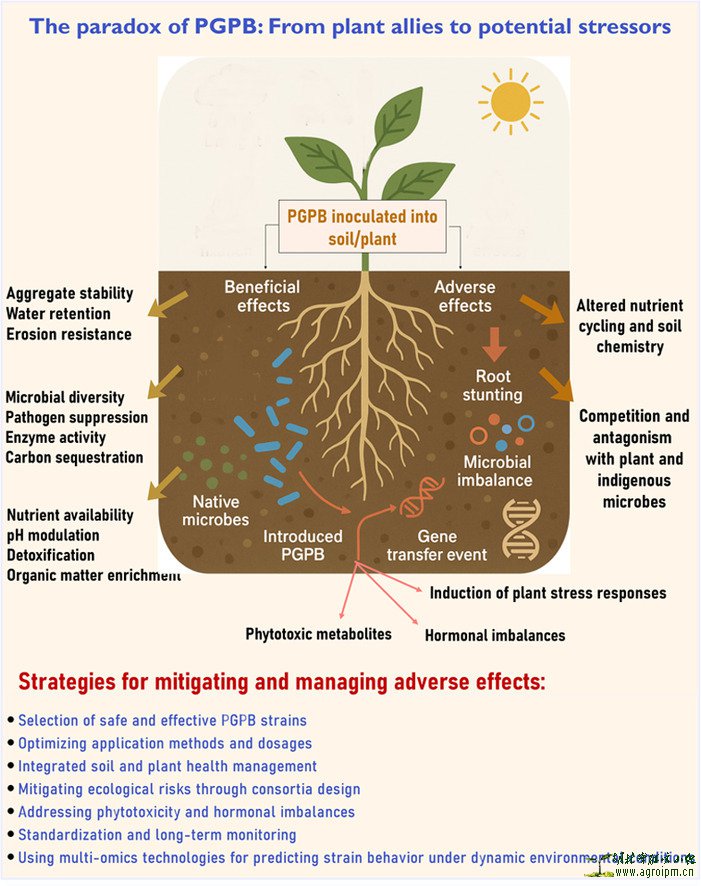
Plant growth-promoting bacteria (PGPB) are pivotal in sustainable agriculture, enhancing crop productivity and reducing reliance on chemical inputs. However, their dual role as beneficial agents and potential stressors remains underexplored. This review examines the paradoxical adverse effects of PGPB, challenging the predominantly optimistic narrative surrounding their use. At the plant level, unintended consequences include hormonal imbalances (e.g., auxin-induced root inhibition), phytotoxic metabolite production (e.g., hydrogen cyanide), and trade-offs between growth and defense mechanisms. At the soil level, risks encompass disrupted microbial diversity, altered nutrient cycling, and horizontal gene transfer that may foster pathogenicity. These outcomes are driven by environmental factors (soil pH and moisture), host-specific interactions, and application practices. Mitigation strategies emphasize rigorous strain selection, optimized dosing, and integrated soil management to balance efficacy with ecological safety. Advances in multi-omics technologies and synthetic consortia design offer predictive insights into strain behavior, while long-term ecological assessments are critical to address legacy impacts. The review underscores the necessity of a nuanced, evidence-based approach to PGPB deployment, harmonizing agricultural benefits with environmental stewardship. By addressing knowledge gaps in microbial ecology and risk assessment, this work supports strategies prioritizing both agricultural resilience and soil biodiversity to ensure PGPB contribute sustainably to global food security.
植物促生菌(PGPB)在可持续农业中具有关键作用,能提高作物产量并减少对化学投入品的依赖。然而其作为有益微生物与潜在胁迫因子的双重角色仍研究不足。本综述探讨了PGPB的矛盾性负面效应,对当前普遍乐观的应用叙事提出了质疑。在植物层面上,其非预期后果包括:激素失衡(如生长素诱导的根系抑制)、植物毒性代谢产物生成(如氰化氢),以及生长与防御机制之间的平衡。在土壤层面,风险包括微生物多样性破坏、养分循环改变以及可能增强致病性的水平基因转移。这些结果由环境因素(土壤pH值和湿度)、宿主特异性相互作用以及施用方式所驱动。缓解策略强调严格的菌株选择、剂量优化及综合土壤管理,以实现功效与生态安全的平衡。植物促生菌(PGPB)的部署需要综合考量微生物生态学、风险评估框架及农业生态系统动态。多组学技术与合成菌群设计的进步为预测菌株行为提供了新见解,而长期生态评估对于解决历史遗留影响至关重要。本综述强调必须采用精细化的循证方法实施PGPB,协调农业效益与环境管理的关系。通过填补微生物生态学和风险评估领域的知识空白,本研究支持优先保障农业韧性与土壤生物多样性的策略,以确保PGPB为全球粮食安全作出可持续贡献。 


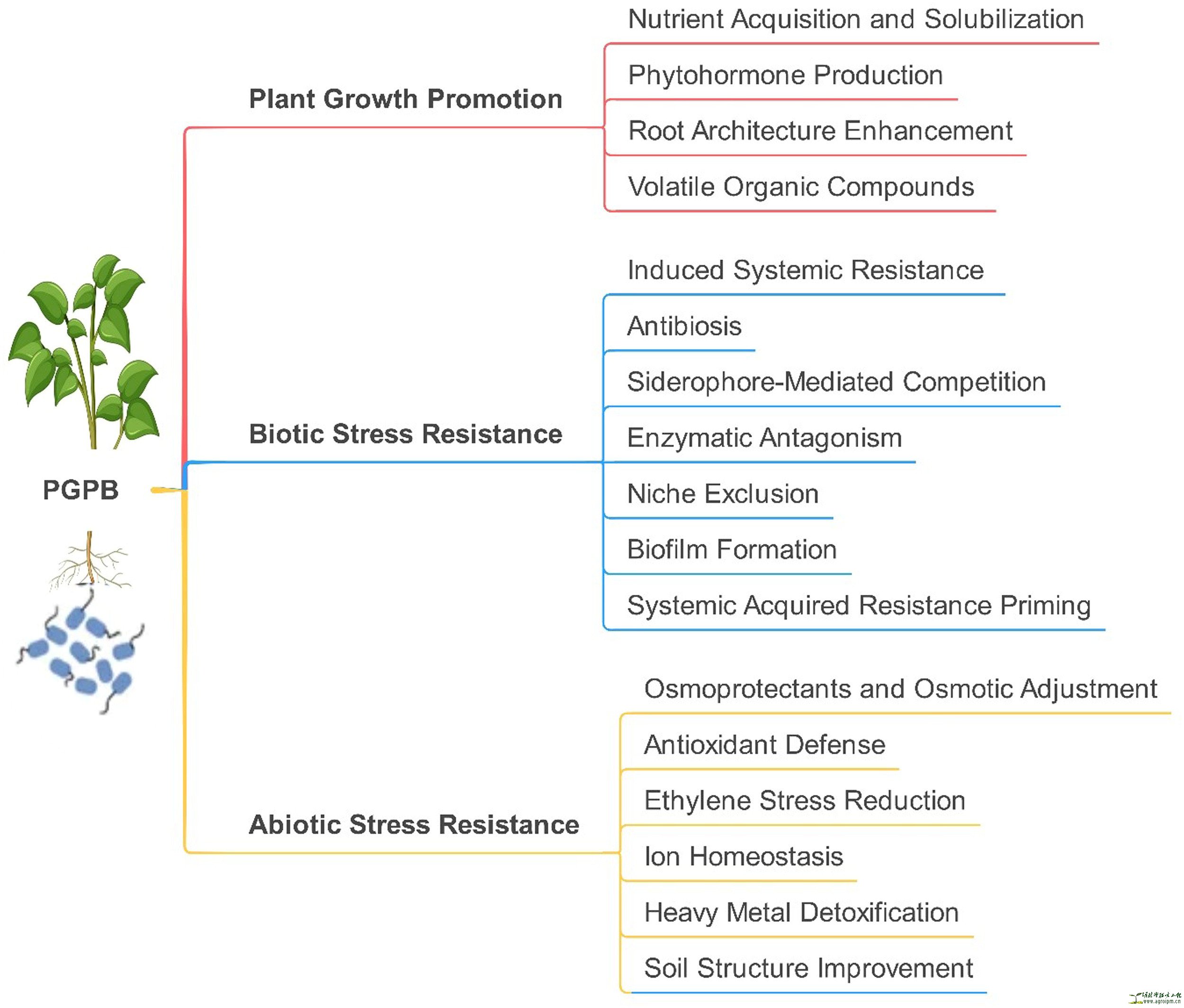
Fig. 1Mechanisms of plant growth-promoting bacteria (PGPB) in enhancing plant growth and stress resistance. PGPB enhance plant growth and resilience through multifaceted strategies. By solubilizing nutrients (e.g., nitrogen fixation, phosphate, and potassium mobilization) and producing phytohormones like auxins and cytokinins, PGPB directly stimulate root development and nutrient uptake. They mitigate abiotic stresses via 
osmoprotectants (proline and glycine betaine), antioxidant enzyme induction (SOD and CAT), and ACC deaminase activity to reduce ethylene-induced stress. Under biotic stress, PGPB suppress pathogens through antibiosis (antibiotics), siderophore-mediated iron competition, and induced systemic resistance (ISR) via jasmonic acid/ethylene signaling, while enzymes like chitinases degrade pathogen cell walls. Synergistically, improved root architecture, nutrient efficiency, and hormonal crosstalk amplify plant health, enabling adaptation to environmental challenges. These interconnected mechanisms underscore PGPB’s role in sustainable agriculture by reducing reliance on chemical inputs.
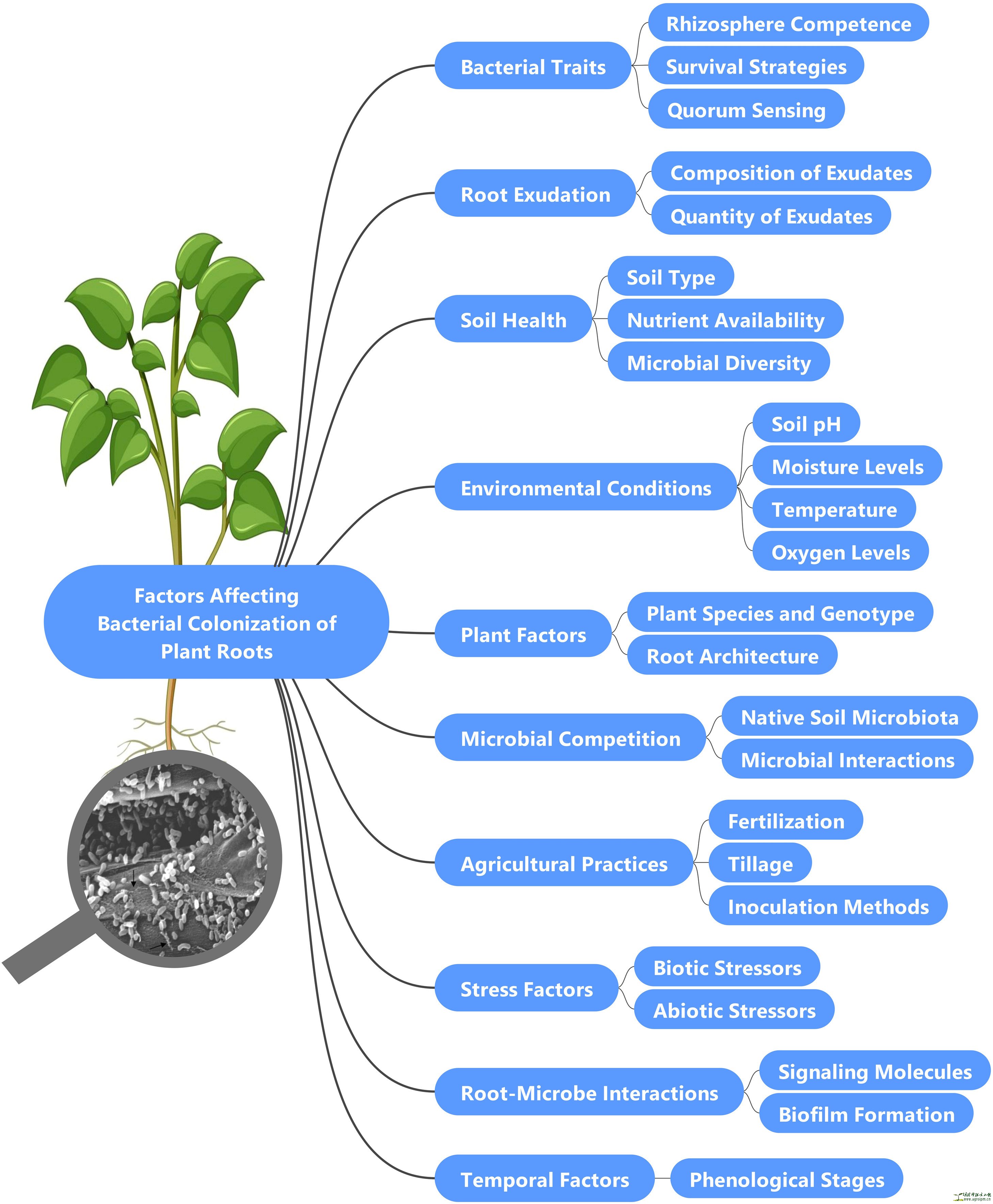
Fig. 2Factors affecting bacterial colonization of plant roots. Bacterial colonization of plant roots is influenced by a variety of interconnected factors. Key bacterial traits, such as rhizosphere competence and survival strategies, play a crucial role in their ability to establish on roots. The composition and quantity of root exudates, which include sugars, amino acids, and organic acids, significantly impact microbial attraction and growth. Soil health, characterized by soil type, nutrient availability, and microbial diversity, is essential for effective colonization. Environmental conditions, including soil pH, moisture levels, temperature, and oxygen availability, also affect bacterial activity. Additionally, plant species and genotype influence microbial community selection, while competition with native soil microbiota can limit the success of introduced plant growth-promoting bacteria (PGPB). Agricultural practices, such as fertilization and tillage, further alter microbial dynamics, and various stress factors, both biotic and abiotic, can hinder bacterial colonization. Root-microbe interactions, facilitated by signaling molecules and biofilm formation, enhance attachment to plant roots, while temporal factors related to the plant’s phenological stages can shape colonization patterns.

微信扫码 关注我们

  • 24小时咨询热线

    24小时咨询热线

  • 移动电话

Copyright © 2007-2025 AgroIPM. All Rights Reserved 地址: 备案号:豫ICP备15013081号-4 网站地图